

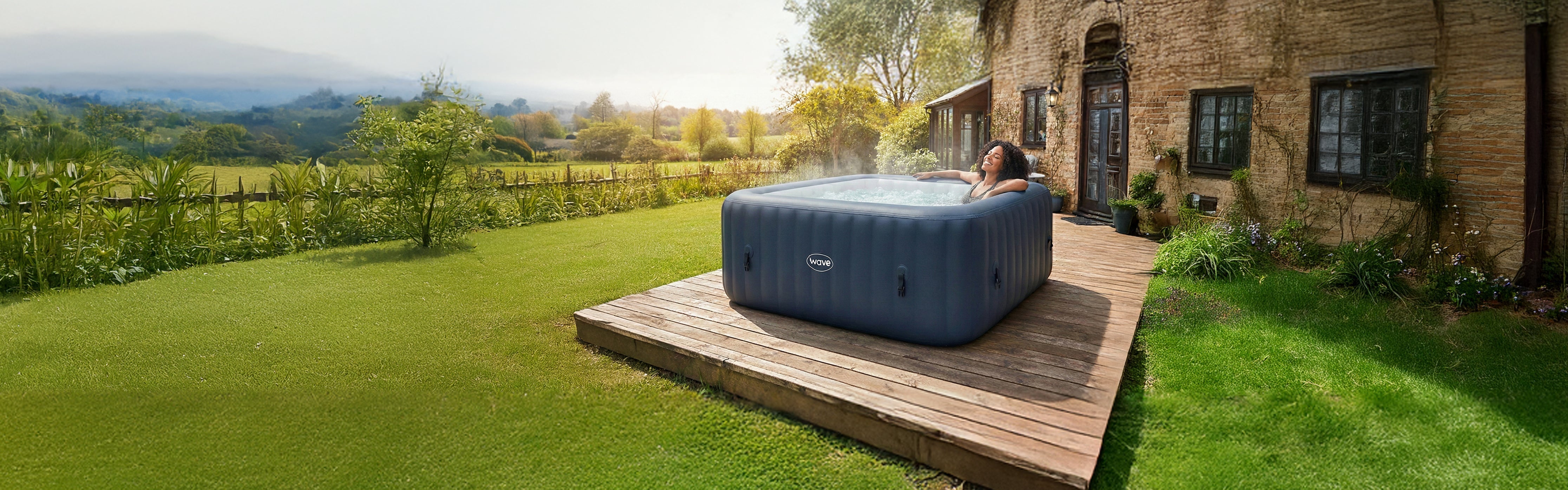
A Wave Spa is designed for relaxation, but that relaxation depends on a heater working at peak efficiency. If your spa is taking too long to heat or you're seeing error codes on the display, this guide will help you diagnose the issue.
The Golden Rule: Managing Heating Expectations
Wave Spas use an efficient 1500W–2000W heater (depending on the model). It is important to remember that these units heat water at a rate of approximately 1–2°C (2–3°F) per hour.
To optimize heating time:
-
Keep it Covered: Always use the inflatable bladder and the weather cover while heating. Without a cover, heat escapes faster than the unit can produce it.
-
Check the Ambient Temp: If the outside temperature is below 10°C (50°F), the heater will work significantly harder.
-
Start Warm: If possible, fill your spa with lukewarm (not boiling!) water to give the heater a head start.
Heating in Cold Weather: Winter Tips
Using your Wave Spa during autumn and winter is absolutely possible, but colder ambient temperatures mean your heater has to work harder. Here's how to get the best performance year-round:
-
Pre-heat before you plan to use it: In cold weather, start heating 8–12 hours before your planned soak. Set your target temperature and let the spa work gradually — don't expect it to heat from cold to 40°C in a couple of hours when it's freezing outside.
-
Use a thermal ground mat: Placing an insulating mat or foam board underneath your spa significantly reduces heat loss through the base, especially on cold patios or decking.
-
Shelter from the wind: Wind chill dramatically increases heat loss. Position your spa in a sheltered spot or use a windbreak screen to help retain heat.
-
Keep the cover on between uses: Even when the spa is at temperature, always replace the cover immediately after use to maintain heat and reduce energy consumption.
-
Do not drain in freezing temperatures: If temperatures drop below 0°C, do not leave your spa empty — residual water in the pump and pipes can freeze and cause damage. If you need to store the spa over winter, drain it fully and dry all components before packing away.
Common Troubleshooting Steps
1. The "Filter-Free" Diagnostic Test
Most "heater failures" are actually water-flow issues caused by a dirty filter.
-
The Test: Remove the filter cartridge entirely and run the heater for 30–60 minutes.
-
The Result: If the temperature begins to rise without the filter, your cartridge was restricted and needs to be cleaned or replaced.
2. Fixing an "Airlock"
If you have just filled your spa and the heater isn't moving water, you likely have an airlock (air trapped in the pipes).
-
The Fix: Turn the "Bubbles" function on for 20–30 seconds. This usually "burps" the system and forces the air out, allowing the water to circulate through the heater.
3. Resetting the PRCD (Power Plug)
If your control panel is completely blank, check the PRCD (the large box on the power cable).
-
Press the 'Reset' button. The indicator light should turn red.
-
If it trips immediately, try a different outdoor socket. Never use an extension lead, as these cannot handle the high amperage required by the heater and are a fire risk.
4. Check the Water Level
An often-overlooked cause of heater issues is a low water level. If the water level drops below the minimum fill line, the pump may draw in air instead of water, causing the heater to cut out or display an error.
-
Always ensure the water level is between the minimum and maximum fill lines marked on the inside of the spa.
-
Top up with fresh water as needed, especially after heavy use or in hot weather when evaporation is higher.
Understanding Error Codes
| Code | What it Means | The Quick Fix |
| E1 | Water Flow Issue | Clean or replace your filter. Check that the suction and outlet ports aren't blocked by debris. |
| E2 | Sensor / Temperature Probe Fault | Power the unit off completely, wait 5 minutes, and restart. If the error persists, the temperature sensor may need replacing — contact our support team. |
| E3 | High Temp Protection | The water inside the heater got too hot. Turn the power off, let it cool for 20 minutes, and restart. Ensure the filter is clean and water flow is unrestricted. |
| E4 | Low Water Temperature / Freeze Protection | The water temperature is too low for safe operation. This can occur in very cold weather. Allow the ambient temperature to rise or move the spa to a warmer location before restarting. |
| END | Auto-Power Save | The spa has reached its set temperature or has been running for 72 hours straight. Just press any button to restart. |
Filter Maintenance: The Key to a Healthy Heater
Your filter is the single most important factor in keeping your heater running efficiently. A clogged filter restricts water flow, which forces the heater to work harder and can trigger E1 errors or cause premature wear.
Recommended filter maintenance schedule:
-
Every 1–2 weeks: Rinse the filter cartridge with clean water to remove loose debris and body oils.
-
Every 4–6 weeks: Soak the filter in a dedicated filter cleaning solution overnight, then rinse thoroughly before reinstalling.
-
Every 3–4 months (or sooner if visibly worn): Replace the filter cartridge entirely. A worn filter cannot be fully cleaned and will continue to restrict flow even after soaking.
Always allow the filter to dry fully before reinstalling if you have used a chemical cleaning solution, and never run the spa without a filter for extended periods as this can allow debris to enter the pump.
When to Replace the Heater Unit
If you have performed the "Filter-Free" test and checked for airlocks but the temperature still refuses to budge, your heater element or thermal sensor may have failed.
-
For Inflatables: The heater is located inside the external pump unit.
-
For Rigid Eco Foam: The heater is an integrated "all-in-one" unit inside the spa wall.
Safety Warning: Never attempt to open the heater unit yourself while it is plugged in. Always disconnect from the power supply before inspecting the internal components.
Frequently Asked Questions
How long does it take to heat a Wave Spa from cold?
From cold tap water (approximately 10–15°C), expect 8–12 hours to reach 40°C in mild weather. In colder conditions, this can take longer. Starting with lukewarm water and keeping the cover on throughout will significantly reduce heating time.
Can I leave my Wave Spa on all the time?
Yes — in fact, it is often more energy-efficient to keep the spa at a maintained temperature (e.g. 35–38°C) rather than heating from cold each time. The spa's auto-power save (END) function will manage this automatically. Just ensure the cover is always on when not in use.
Why is my spa heating slowly even though the filter is clean?
Check the ambient temperature and wind conditions. Cold or windy weather dramatically increases heat loss. Also verify the cover is fully sealed with no gaps, and that the water level is correct. If all of these are fine, the heater element may be losing efficiency and could need replacing.
Is it safe to use my Wave Spa in the rain?
Yes, Wave Spas are designed for outdoor use and are safe to use in light rain. However, avoid using the spa during thunderstorms or high winds. Always ensure the PRCD plug is protected from direct water ingress and never use an extension lead.
Share:
The Ultimate Guide to Wave Spa Filter Maintenance & Water Care
Covers, Liners & Insulation: Protecting Your Investment